Spiritual Disciplines

Resources for the Spiritual Disciplines

Spirit of the Disciplines
Dallas Willard
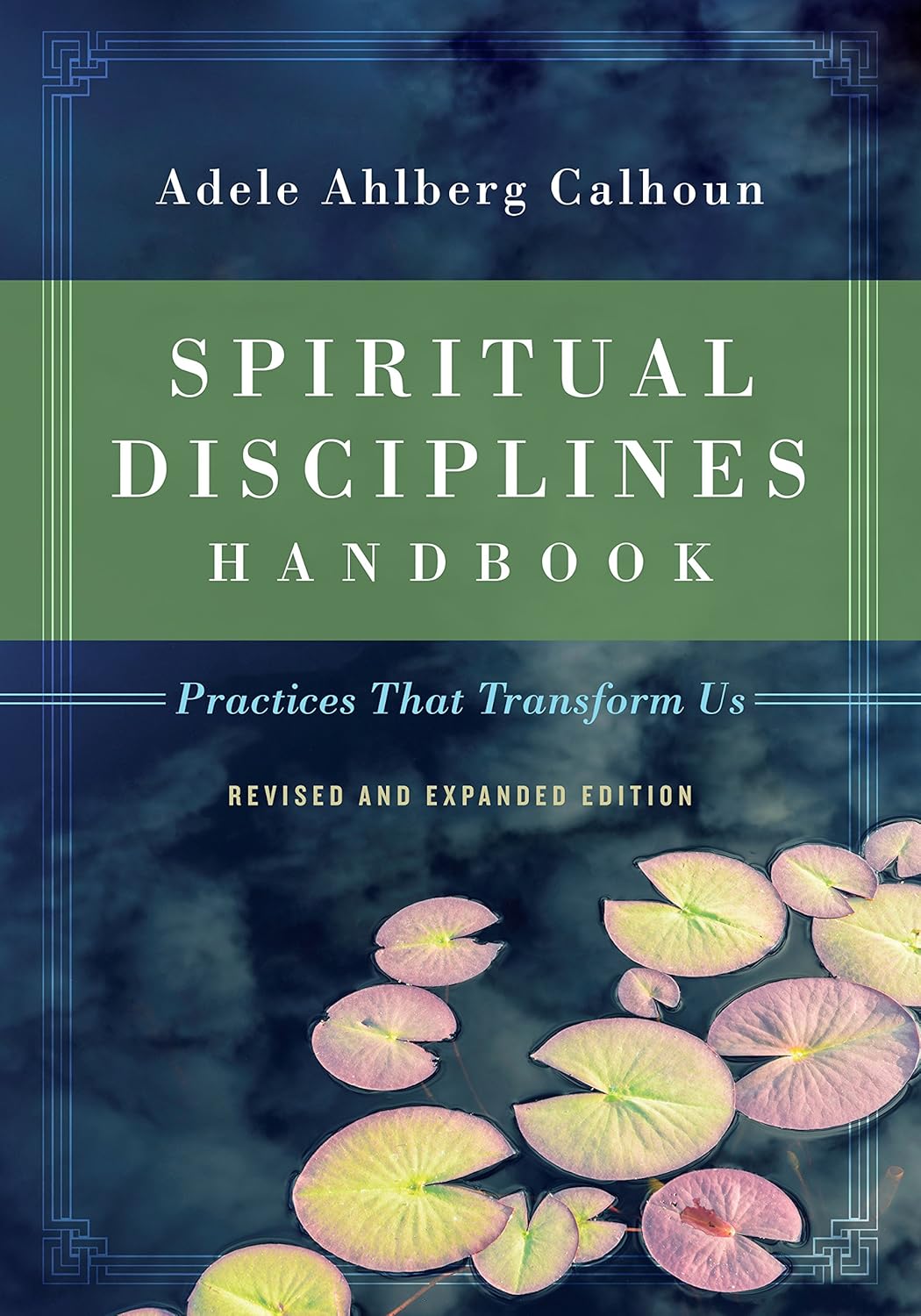
Spiritual Disciplines Handbook
Adele Calhoun
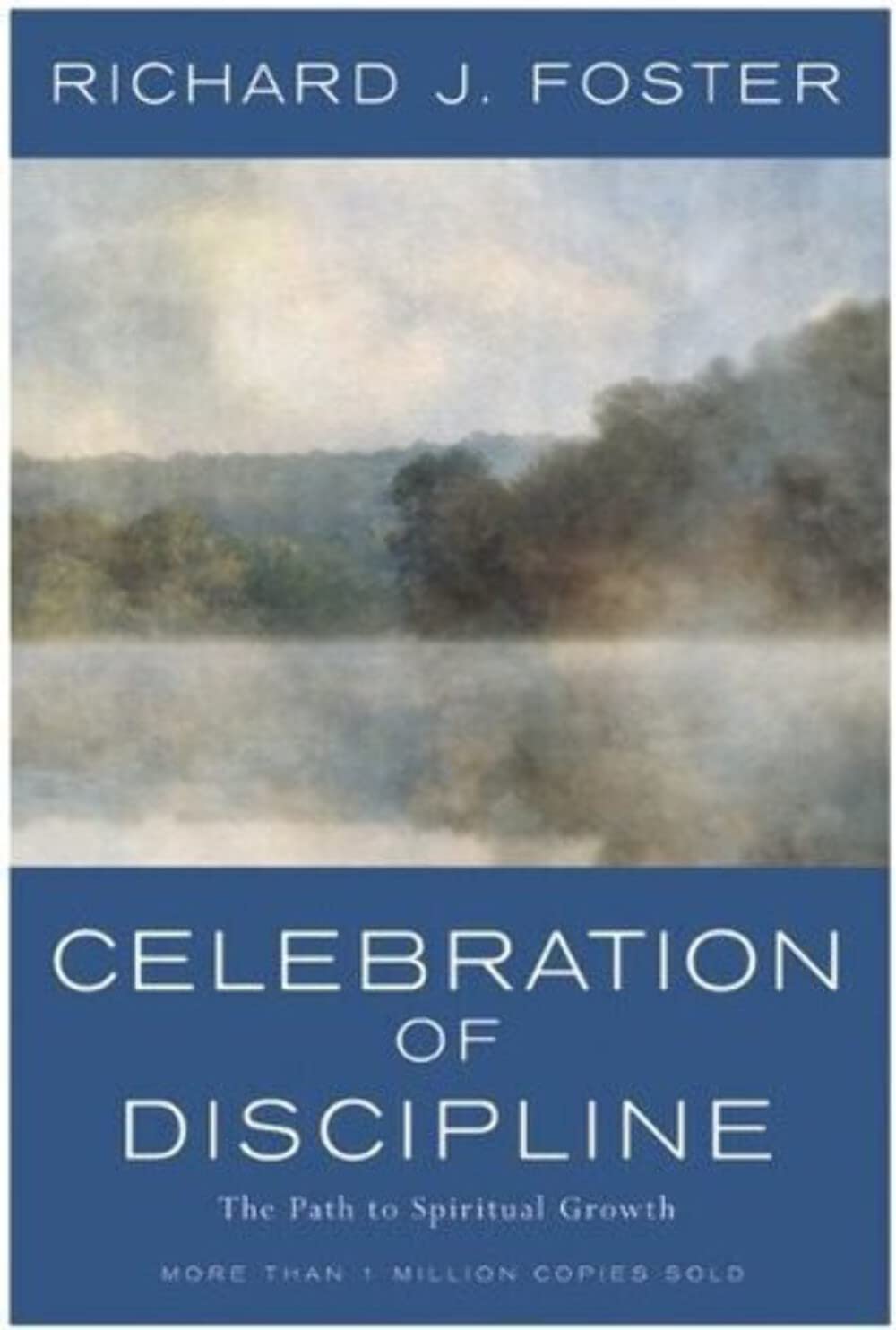
Celebration of the Disciplines
Richard Foster
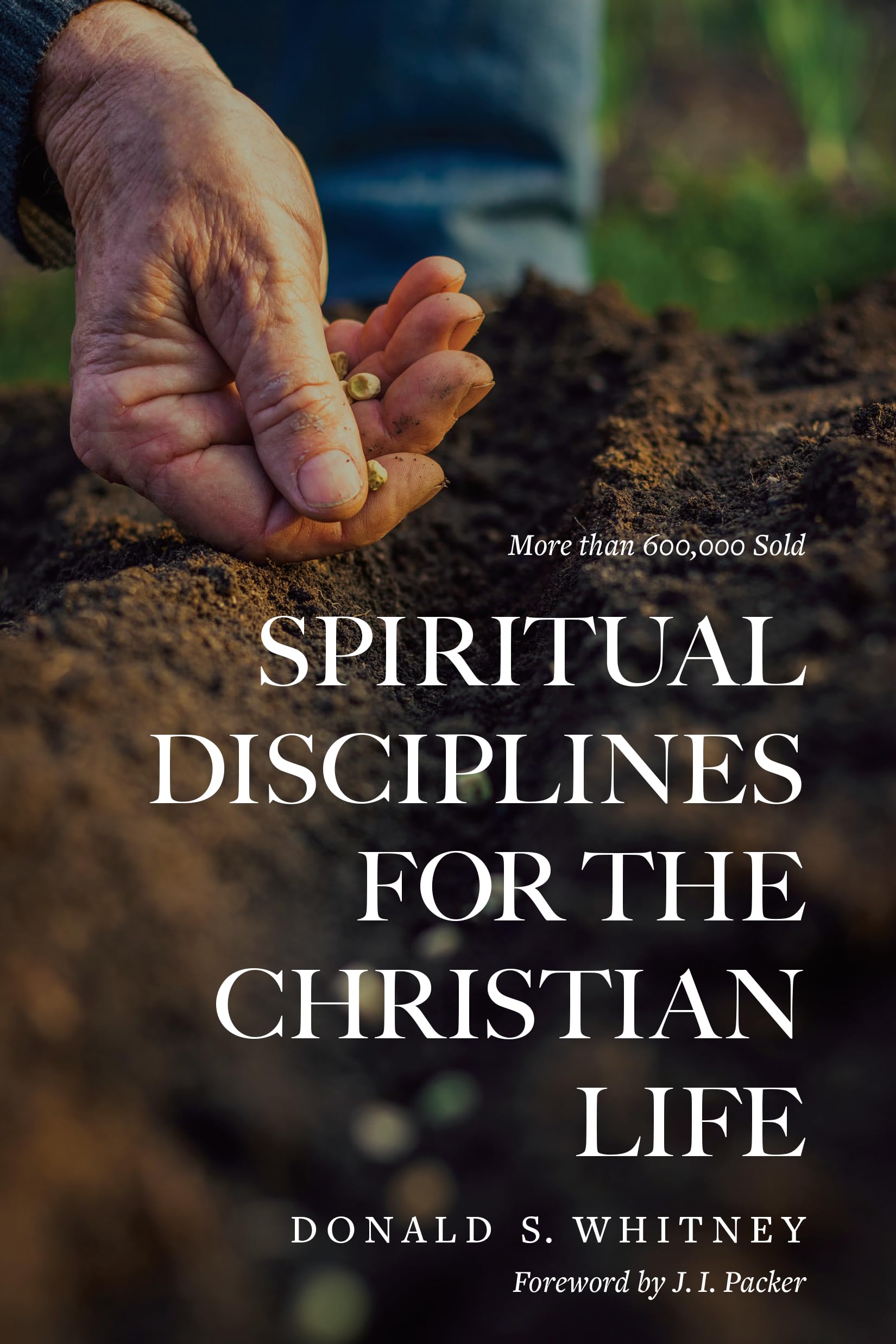
Spiritual Disciplines for the Christian Life
Donald Whitney
A Short Guide to Spiritual Disciplines: How to Become a Healthy Christian
Mason King
The Life You've Always Wanted
John Ortberg
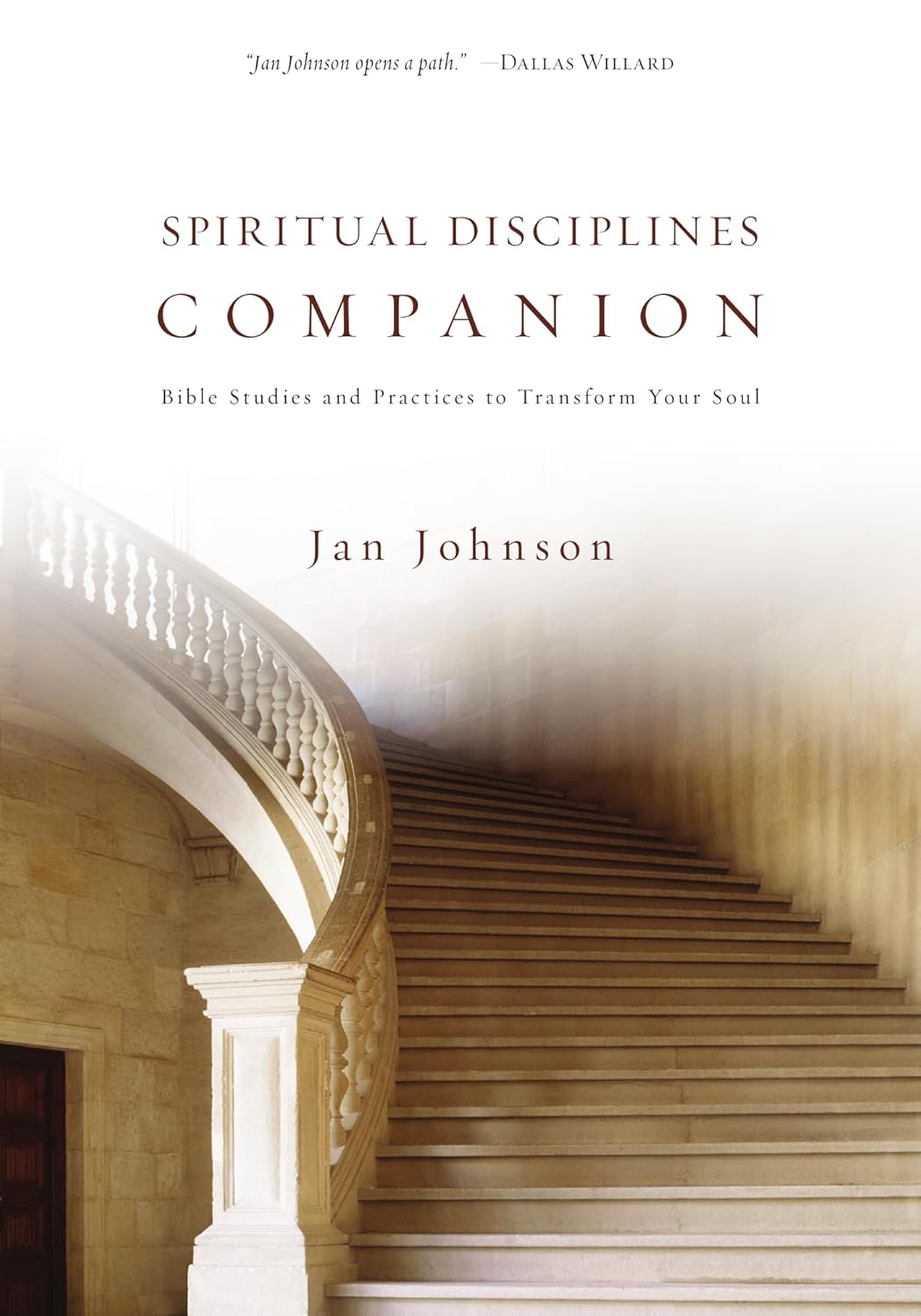
Spiritual Disciplines Companion: Bible Studies and Practices to Transform Your Soul
Jan Johnson

Week 1: Meditating on Scripture

  1. If possible, do this first thing in the morning to shape your thoughts for the day, and last thing at night so it settles in your heart as you sleep. A great app to help you do this is Lectio365, which has options to do this in the morning, at midday, and at night.
  2. Put aside all distractions so you can fully focus on God. If you are using a Bible app on your phone, put it on Airplane Mode.
  3. Open your hands and rest them in your lap as a sign of surrendering your will to God’s will and your willingness to entrust your worries, fears, and cares to God.
  4. Choose one or two verses and read them out loud slowly, intentionally, and repeatedly 3 to 5 times.
  5. Ask yourself three questions:
    1. What does this passage teach me about God? – Focus on God’s character, promises, or actions.
    2. What does this passage teach me about myself? – Consider how it reveals my attitudes, behaviors, or heart posture.
    3. How should this passage change the way I think, feel, or act? – Apply it personally to your decisions, relationships, or daily choices.
       6. Turn the Scripture into a prayer.

Week 2: Studying Scripture

 
How do I STUDY the Scriptures?

S Seek God’s guidance and direction as you begin.
Psalm 119:18 Open my eyes that I may see wonderful things in your law.

T Take time to read the passage carefully.
  • Read it slowly (re-read it again)
  • Make observations (you may want to make a mental note or write observations or
    questions down in a notebook)
  • Notice key words or phrases (don’t be afraid to highlight words or write them down to
    come back to)
  • Check the context (read some of the verses before and after the key verse/verses you
    are studying)
  • Look to see who the author is and who the audience is. (use a study Bible or
    commentary to help here if needed)
  • Note what questions are arising in your mind as you read. (What are wondering?)

U Understand the meaning.
  • What was the author’s intent?
  • What does it say about God?
  • What does it say about people?
  • How would the people of that day have heard or understood it?
  • What have I already learned about this passage?
  • Look up key words (see Biblehub.com)
  • Look at commentaries (NIV Application Commentary Series and God’s Word For You
    Commentary Series)
  • How does this passage fit with the rest of scripture?
  • What questions do I still have? (see Gotquestions.org)

D Discern how it applies to life today.
  • Is there a command to obey?
  • Is there a warning to heed?
  • Is there a sin to confess?
  • Is there an example to follow?
  • Is there something I need to change in my attitude, thinking, or behavior?
  • Is there a verse to put to memory?
  • What is God’s word calling me to do in response to what I have read?

Y Yield to God through obedient action.
Take a few minutes to pray, confess, commit, ask for God’s help to live out His word.
Bible Study Resources:
  • ESV Study Bible
  • NIV Life Application Bible
  • NIV Application Commentary Series
  • God’s Word for You Commentary Series
  • https://biblehub.com/
  • https://www.gotquestions.org/
  • https://enduringword.com/
 

Week 3: Prayer

  1. Prayer is an ongoing conversation with God.

    When should we pray?

    “…on all occasions…” Ephesians 6:18

    What should we pray about?

    “…in every situation…”  Philippians 4:6

    How should we pray?

    “…with all kinds of prayers and requests…”  Ephesians 6:18

    “…by prayer and petition, with thanksgiving, present your requests to God.”  Philippians 4:6

    A.C.T.S.

    • Adoration: An expression of love.

    Take a moment to acknowledge who God is.  What are some of the qualities (or characteristics) of God? 

    • Confession: Admitting.

    Take a moment to be honest with God about the sin in our lives.  Those things that we are saying, thinking, and doing that are going against God and His word. What do I need to be honest about?

    • Thanksgiving: Gratitude/Praise.

    Take a moment to give thanks to God.  Thank him for the small things and for the big things.

    • Supplication: To ask.

    Take a moment to express a need to God.  What are the things that are on your mind you need help with?

    -Share your praises and prayer requests with us!  Our prayer team loves to be praying for you, and with you, during the week.

    -Come to our Pause Prayer events.  A safe, quiet place for you to have a conversation with God.

    -Check out “Everyday Prayers” devotional by Scotty Smith.

Week 4: Fasting

Three things to know before fasting:

  1. Remember the purpose of fasting: “We give up something temporarily, so we can GAIN something eternal.”


  1. Jesus deals with our motives, not the mechanics of fasting. What we are suggesting isn’t a prescription for how you should fast; rather, it’s a description of ways to help you enter a season of prayer and fasting more faithfully and effectively.


  1. Fasting isn’t easy…and that’s the point! Whatever you choose to fast from should be sacrificial and challenging. It’s in those moments of discomfort and unmet desires that we run to Jesus and experience His presence and guidance more clearly.

How to Fast

  1. While there are many types of fasts, we are going to focus on two types of fasts at The Chapel: Food-related Fasts and Technology/Digital Fasts. Choose one of the following options within these two fasts:
  • Options for a Food-related Fast:
  • Fast from a meal or for the entire day.
  • Daniel Fast: Fruits, vegetables, whole grains, water
  • No snacking between meals or at night.
  • Sugar or caffeine fast
  • Options to fast from for a Technology/Digital Fast:
  • Social Media
  • Entertainment (TV, Netflix, Podcasts, Music)
  • News
  • Online Shopping
  • Turn your “Smart Phone” into a “Dumb Phone” by limiting your phone us to calls, texts, and calendar only.
     
  1. Practice fasting from something at least once a week. In the midst of your fast, especially when you feel the desire to give in, pause and pray, journal, listen to worship music or read Scripture.
     
  2. Participate in our church-wide fast during Lent. It will begin on Ash Wednesday, February 18th, and conclude on Easter Sunday, April 5th. 
  • Each person will choose one thing to fast from for the entire time.
  • Use the time you would normally spend on that activity or habit to pray, read Scripture, or serve others.
  • Be intentional about reflecting on your dependence on God and what He is teaching you through the fast. If God does something special in your life during this time, email Pastor Eric (eric@thechapel.family) so we can possibly share your story anonymously as encouragement to our church during the Lenten fast.
  • Encourage and support others in the church as we journey together through this season.


Week 5: Sabbath

  1. Treat the Sabbath as essential, not optional. Therefore, schedule the Sabbath before the week schedules you.
    • When it comes to the specific day you choose, remember there is freedom here. As Paul writes in Romans 14:5: “One person considers one day more sacred than another; another considers every day alike. Each of them should be fully convinced in their own mind.”
    • A full 24-hour day may not be realistic at this point in your life. Choose 12 hours, 4 hours, or even 2 hours, rather than not embrace The Sabbath at all. 
    • Remember: While the Sabbath is no longer a law we are commanded to keep, it is a gift God invites us to receive. Don’t let the busyness of life rob you of this gift.

  2. A helpful way to approach the Sabbath is to follow the three R’s: Reflection, Rest, and Renewal.
    • Reflection: The goal is to realign your heart with God and others.
      • Pause and reflect on God’s character and all the ways He has blessed you.
      • Take an inventory of your shortcomings from this past week and confess those to God.
      • Consider your closest relationships and ask God to reveal where you need to forgive, reconcile, or grow.
    • Rest: The goal is physically, mentally, and spiritually stopping so you can recover from the week’s demands.
      • Take a nap or go to bed earlier.
      • Take a walk outside, breathe fresh air, and simply enjoy the moment.
      • Avoid checking emails or social media.
    • Renewal: The goal is to engage in activities that you enjoy that will help you recharge and refresh your soul.
      • Spend quality time with your family or friends.
      • Go to a movie, a ballgame, or a show.
      • Make a delicious meal at home or go out to your favorite restaurant. 

Week 6: Silence and Solitude

“Prayer of Examen”

By Ignatius Loyola

  1. Reflect on Your Day – Notice where God was present and where you drifted.
  2. Examine Your Heart – Identify moments of gratitude, sin, and growth.
  3. Confess and Receive – Bring your sin to God and receive is His grace and forgiveness.
  4.  Invite God’s Guidance – Ask Him to shape your heart and lead your day tomorrow.
  1. Start where you are and
    not where you feel
    you should be.
  2. Choose a particular time of day that works best for you.
  3. Choose a place that is quiet without external distractions.
  4. Take your time, slow down, and breathe.
  5. Fix your eyes and heart on Jesus, the author and perfecter of your faith.

Week 7: Simplicity


The discipline of simplicity is a little harder to spell out in exact steps than the others because all of us have different incomes, responsibilities and seasons of life. So, instead of giving specific principles to follow, here are four questions, along with practical steps, that will help you identify how God’s calling you to take the next steps towards a life of simplicity.

  1. Does my budget say, “I need more to be satisfied,” or “I am satisfied with what I have”?
    1. Practical Step: Go home this week and look at your last 60 days of spending. Identify anything that was driven more by desire than need, and prayerfully choose one way to scale back for the next month.
  2. When I have extra money, is my first instinct to upgrade my lifestyle or to be generous?
    1. Practical step: The next time unexpected money comes in (bonus, gift, tax return), give a portion away before spending any of it.
  3. Is my home filled with things I once wanted but no longer need?
    1. Practical Step: Give away one item you value but don’t truly need to someone who could use it.
  4. Do I find myself feeling jealous, envious, or restless when I see what others have?
    1. Practical Step: The next time that feeling rises up, stop and immediately thank God out loud for three specific things you already have.


Week 8: Celebration & Worship

How can we practice the discipline of Celebration?

  1. Find something to celebrate every day. 
     Psalm 118:24  “This is the day the Lord has made; let us rejoice and be glad in it.”
     
  2. Keep a gratitude journal.  1Thessalonians 5:18  "Give thanks in all circumstances.”
     
  3. Be intentional about celebrating  both big and small next steps in your life and others. 
     Do the same to celebrate when you see God at work.
     
      -     Make an announcement or share a post.
  • Make a special meal or throw a party.
  • Light a candle, plant a tree,  build a memorial, paint a picture, write a poem or song.
  • Give a gift.
  • Have a dance party.
  • Start your own holiday.
  • Invite others into the celebration.


How can we practice the discipline of Worship? 
 

 1.  In the morning take time to read scripture and pray and devote your day, your work to God. (Colossians 3:17)
 
 2.  Pause mid-day to reflect on how God has helped you,  take time to thank him and then ask for his help for what comes next in your day.

 3.  Look for people to love and serve in small ways during your day.


 4.  Take a worship walk or a worship drive.


 5.  Experiment with different postures of worship…

          - Bow down/Kneel in humility and submission.  Psalm 95:6  “Come, let us
             worship and bow down.  Let us kneel before the Lord our maker.”
          - Lift your hands  in celebration, praise, commitment.   Psalm 63:4 “I will praise you as
              long as I live, and in your name I will lift up my hands”
          - Open your hands as a symbol of surrender, or receiving. 
          - Sing and/or Dance in Joy and Celebration.   Psalm 100:1–2 “Worship the Lord with
             gladness; come before Him with joyful songs.”  2 Samual 6:14  And David danced
             before the Lord with all his might.

  1. Give a Sacrificial, Generous Gift. 
    Share a testimony with others of God’s faithfulness. 

Week 9: Community

  1. God has wired us to be in relationships so if we don’t prioritize them, we’re going to suffer, emotionally, relationally, spiritually and even physically.
    Loneliness is as harmful to your health as Alcoholism, Obesity, and Heavy Smoking. (WebMD)
  2.  Community is a primary means of sanctification and answered prayers
    “… Jesus makes his invisible presence visible through his people, who represent him in one-another’s lives.” -Paul Tripp
  3. Jesus modeled this.

    HOW TO BE IN COMMUNITY
    How do we begin to grow closer to God and each other through Christ?
    It begins with committing to more than attending services.
    It means connecting with Jesus daily and allowing Him to create in you the character of a gracious, caring and forgiving person who can withstand the beauty and challenges of real community.
    It means serving others
    It means getting plugged in to community.
    Perhaps joining a small group(circle) is your next step.
    To explore small groups at The Chapel, click HERE.

Week 10: Evangelism

One definition for evangelism:

“Evangelism is helping people take a next step toward Jesus by our lives and our words.”


“Methods are many, principles are few. Methods often change, principles never do.”


Abiding principles for practicing the discipline of evangelism:

  1. Depend on God.
  2. It is God’s role to open eyes and give new life.
  3. Our role is to pray. Another role is to…
  4. Love People
  5. Love is the Christian’s greatest apologetic.
  6. Just as God crossed the boundary of heaven and earth to come to you, learn to love past boundaries/limits. No person is exempt.
  7. Be Authentic.
  8. Don’t hide your faith. No need to be loud. Just clear, genuine. “I follow Jesus.”
  9. Don’t hide your faults. Healthy transparency. “I am a fellow struggler with a heart to follow Jesus.”
  10. Stay Relevant.
  11. Resist being a chameleon. Don’t try to be like everybody else just to fit in.
  12. Resist being a porcupine. Don’t run from the non-Christian crowd. They need your presence and witness.
  13. Find middle ground. Be like Paul/Jesus. Learn to rub shoulders with non-believers without violating Scripture or conscience. (1 Cor 9:19-23
  14. Three starters for staying relevant:  1. Draw close but without being a chameleon.  2. Show interest. Ask questions.  3. Listen.
  • For asking questions, use this acronym:
  • F…family (ask about family, heritage, upbringing, etc)
  • O…Occupation (ask about job, inside/outside home, etc)
  • R…Recreation (ask about interests, hobbies, travel, etc)
  • M…Meaning (ask about spiritual background, God, church, hurts and hopes, dreams and desires, Jesus, etc)
  • Interest begets interest”.  Overtime, as you engage in conversation, listen for opportunities to share some of your life, interests and faith in Jesus.  How do you share???


  1. Live Generously. 
  • Ideas for generously sharing your faith in Jesus:
  • Tell your story.  In the context of your conversation, ask permission to share how you arrived at faith in Jesus…how you made your decision to follow Jesus.
  • Invite your friend to look at the Bible with you. It is amazing how many people, who don’t know much of anything about the Bible, will accept an invitation by a trusted friend to look at the Bible together for a period of time.
  • Invite someone to attend a church service.  In each Chapel atrium, see the “Invite” rack and distribute invitations to your friends.
  • Complete a “MY 3” card.  Get your card at the Chapel atrium “next step” station.  Start praying for those in your circle of influence. “Lord, open doors, open eyes, help me share.”
  • Share the key components of the gospel using links below as ideas:
  • James Choung on Right Now Media:  https://app.rightnowmedia.org/en/content/details/798998
  • 3 Circle Evangelism

https://www.youtube.com/watch?v=5W8ynRMr59k

  • The Bridge Gospel Illustration using Romans 6:23

https://www.youtube.com/watch?v=7gr0xXfR3L8

  • The Romans Road

https://www.youtube.com/watch?v=0DcnfbMm8aY


Some really good books on evangelism:

God Space by Doug Pollock

Out of the Saltshaker and Into the World by Rebecca Manley Pippert

Lifestyle Evangelism by Joe Aldrich

The Art of Asking Better Questions by J.R. Briggs


Week 11: Generosity

Key Takeaways:

  • God's Initiative & Our Response: The core message emphasizes that God initiates generosity, and our response is to gratefully give back, recognizing His provision. “It is more blessed to give than to receive.”
  • Sacrificial Giving Transforms Us: True generosity isn’t just about giving what we can; it’s about sacrificing – putting others' needs ahead of our own, even if it impacts our lifestyle. This transformation comes from God changing us.
  • God Multiplies Generosity: Just as Jesus multiplied loaves and fish, God can turn ordinary resources into extraordinary blessings when given with faith and a generous heart.
  • Generosity is Joyful & Authentic: Giving should be motivated by genuine love for God and others, not guilt or obligation.

Actionable Steps – What You Can Do This Week:

  • Self-Reflection: Honestly assess your current spending habits. Are you primarily focused on personal needs or giving to others?
  • Identify a Need: Choose one area where you can give back—time, talents, or treasure. Consider local charities, the church, or someone in need within your circle.
  • Start Small & Commit: Begin with a small, manageable act of generosity – donating a few dollars, volunteering an hour, offering a skill. Commit to building on this initial step.
  • Practice Sacrificial Giving: Look for opportunities to give beyond your comfort zone—consider giving up something you enjoy to donate to a cause or person in need.
  • Pray & Trust God’s Provision: Recognize that God will meet your needs as you generously provide for others, trusting in His faithfulness and abundance

Week 12: Hospitality

1. Invite someone into your home for a meal or coffee.Hospitality starts with a simple invitation. And don’t stress about making your house look like it’s out of Pinterest or the food tasting like a five-star chef made it. All they want is to simply be invited, seen, and valued. 2. Take a genuine interest in the outsider in your life.This could be the lonely neighbor who always seems isolated, the outsider at school who never gets invited to lunch, or the person at work or in your life who doesn’t yet know Jesus. Ask questions about their life to show that you care about who they are.3. Offer practical help in everyday needs.Bring groceries, mow the lawn, or help with their kids. Tangible acts of service demonstrate God’s love and care in real, practical ways.4. Offer space in your home for someone in need.
If you have an extra bedroom, consider inviting someone who is going through a hard season to live with you temporarily. Providing shelter is a radical, tangible way to show them they are not alone.5. Consider fostering or adoption.
Become a foster or adoptive parent and give one of the many children in our county who are in need a safe place to belong. Your hospitality can give them stability and hope when they need it most.6. Pray with or for them in personPrayer is a powerful way to communicate that their life and struggles matter deeply to both you and God.

SANDUSKY
4444 Galloway Road
Sandusky, Ohio 44870
419.627.0208

Service Times:
Saturday 5pm
Sunday 9 & 10:45am

Office Hours:
Mon-Thurs 9am-5pm
NORWALK
156 S. Norwalk Road
Norwalk, Ohio 44857
567.424.6825

Service Times:
Sunday 8, 9:30 & 11am

Office Hours:
Thur 10am-3pm
PORT CLINTON
4650 E Port Clinton Eastern Rd
Port Clinton, Ohio 43452
419.732.3964

Service Times:
Sunday 8, 9:30 & 11am
giftmagnifiercrossmenu